Italy is visa-free for up to 90 days for most Western travelers under Schengen rules. Its Digital Nomad Visa is more restrictive than Spain's or Portugal's, reserved for “highly skilled” remote workers earning about €28,000/year. April-June and September-October are the best months to visit.
Flight times are nonstop estimates. Plug and currency data come from my travel tools.
Italy rewards picking a region rather than trying to see everything — the country is dense enough with history and food that a rushed multi-city loop tends to leave people more tired than delighted.
Best time to visit
April-June and September-October are the sweet spot: mild weather without July-August's heat and the peak crowds that genuinely overwhelm Venice and the Amalfi Coast in high summer.
Getting around
Trenitalia and Italo high-speed trains connect major cities fast and comfortably — Rome to Florence in under 1.5 hours, Rome to Venice in under 4. Regional trains and buses cover smaller towns, though a rental car opens up rural Tuscany and Puglia much more easily.
Top things to do
See the Colosseum and Vatican Museums in Rome, ideally with a timed-entry booking to skip the worst lines
Explore Florence's Uffizi Gallery and the Duomo, then day-trip into the Tuscan countryside
Ride a vaporetto through Venice's canals early morning before the day-trip crowds arrive
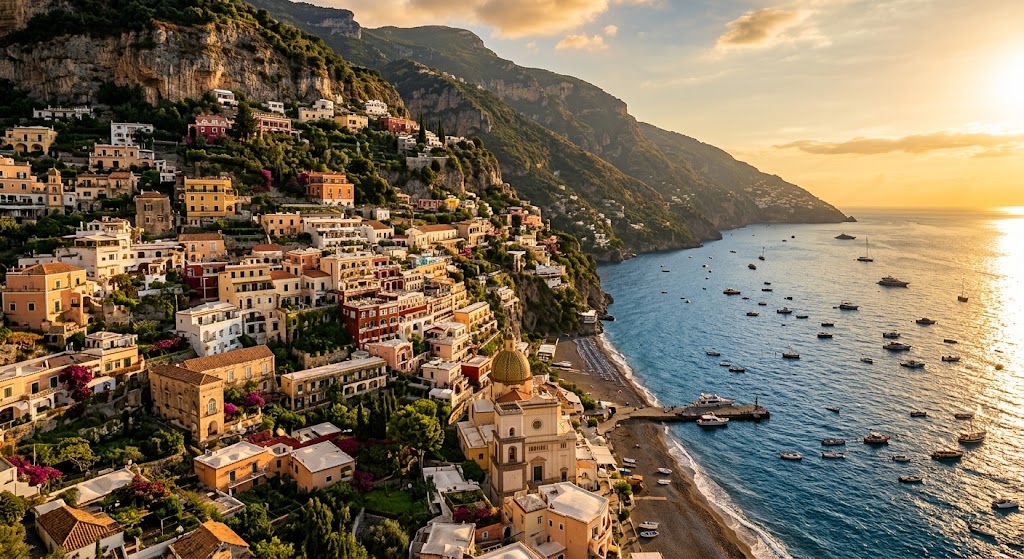
Drive the Amalfi Coast between Positano and Ravello for some of Italy's most dramatic coastal views
Eat in Bologna, widely considered Italy's food capital, away from the more tourist-heavy cities
Budget tips
Standing at the bar for coffee and pastries, rather than sitting at a table, is significantly cheaper almost everywhere in Italy. Smaller towns in Puglia, Sicily, and inland Tuscany offer excellent value versus Venice, Rome, or the Amalfi Coast.
Where to stay
Rome and Florence both work well as central, walkable bases with strong train connections. For a slower stay with lower costs, look at Bologna, Lecce, or smaller towns in Puglia.
No for short stays. Italy is a full Schengen member, so US, UK, Canadian, and Australian passport holders can stay up to 90 days within any 180-day period without a visa.
Who qualifies for Italy's Digital Nomad Visa?
Only \u201chighly skilled\u201d non-EU remote workers \u2014 generally a university degree or 3-5 years of relevant professional experience, plus a minimum annual income of about €28,000 from non-Italian sources. It's more restrictive than Spain's or Portugal's equivalents.
What's the best time of year to visit Italy?
April-June and September-October offer mild weather without July-August's heat and peak crowds, especially in Venice and the Amalfi Coast, which get genuinely overwhelmed in high summer.
Is Italy expensive for travelers?
It varies enormously by region. Venice, the Amalfi Coast, and central Rome are pricey; smaller towns in Puglia, Sicily, and inland Tuscany offer excellent value for similar food and scenery.
Do I need an eSIM for Italy?
It's worth having one. Coverage is strong even in smaller hill towns, and a travel eSIM keeps maps and train-booking apps working the moment you land.