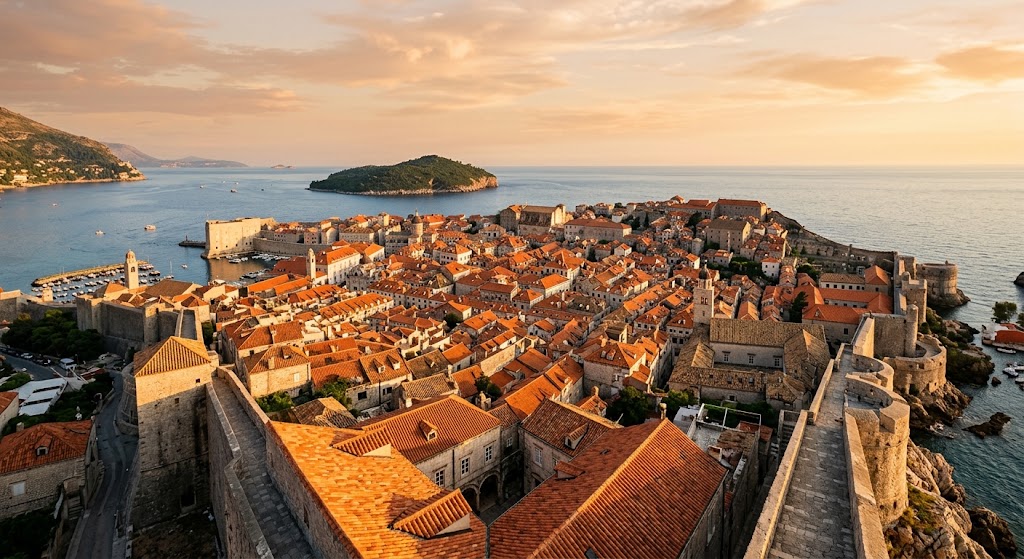
Croatia is a full Schengen member, so most Western travelers get 90 days visa-free. Its Digital Nomad Visa offers up to 18 months tax-free on foreign income for non-EU remote workers. May-June and September are the best months to visit.
Flight times are nonstop estimates. Plug and currency data come from my travel tools.
Croatia's Adriatic coast gets crowded fast in peak summer, but shoulder-season Croatia is one of Europe's better value trips for the scenery on offer.
Best time to visit
May-June and September hit the sweet spot for the coast — warm enough to swim, without July-August's peak crowds and cruise-ship traffic in Dubrovnik and Split. Inland Zagreb is pleasant nearly year-round.
Getting around
Ferries connect the islands and coastal towns and are worth building a route around rather than an afterthought. Buses link major cities reliably; renting a car makes sense if Istria or inland national parks like Plitvice are on the itinerary.
Top things to do
Walk Dubrovnik's Old City walls early morning before cruise-ship crowds arrive
Island-hop between Hvar, Vis, and Korčula for beaches with noticeably different characters
Explore Split's Diocletian's Palace, still a living neighborhood, not just a ruin
Visit Plitvice Lakes National Park for turquoise waterfalls and lakes
Base a few days in Istria for hilltop towns and some of Croatia's best food and wine
Budget tips
Konoba (local tavern) meals stretch a food budget much further than restaurants along the main waterfront promenades. Inland Croatia and shoulder-season coastal towns are noticeably cheaper than peak-summer Dubrovnik.
Where to stay
Split makes a practical base for ferry connections to the islands; Dubrovnik's Old Town is atmospheric but pricier, with better value just outside the walls in Lapad.
No for short stays. Croatia is a full Schengen member, so US, UK, and other visa-exempt travelers can stay up to 90 days within any 180-day period without a visa; an ETIAS travel authorization is expected to become mandatory in late 2026.
What is Croatia's Digital Nomad Visa?
A temporary residence permit (not a traditional visa) for non-EU remote workers, allowing stays up to 18 months with proof of roughly €3,295/month income, tax-free on foreign-sourced earnings even past the usual 183-day residency threshold.
What's the best time of year to visit Croatia?
May-June and September hit the sweet spot: warm enough for the Adriatic coast, without July-August's peak heat, crowds, and prices along Dubrovnik and Split.
Do I need an eSIM for Croatia?
It's worth having one, especially along the coast where you're island-hopping or moving between towns often. A travel eSIM keeps ferry schedules, maps, and translation apps working without switching networks.